What do Museums and Libraries Provide
When it comes to scientific learning, we almost always get our start from our local libraries or museums. Almost everyone holds memories of their first trip to their local children’s science museum. Maybe it was watching someone create static electricity by rubbing a balloon on their head. Or maybe it was walking through the digestive system of a whale. Regardless of the height of the experience, these are all forms of scientific education.
Libraries provide similar access to learning. Through physical books and other online resources, libraries provide ample information for students and the public alike. Libraries also sponsor/host numerous free programs aimed at furthering scientific education, such as:
- Lectures from special guests
- Exploration Exhibits
- Interactive Outdoor Activities (Nature Walks, Botany, Etc.)
- Computer Science Classes
On top of these programs, libraries also serve the general public in ways that are extraordinary but often forgotten. This includes things such as free wifi, access to computers, free black and white printing, and most importantly, the ability to check out books. While now taken for granted, these resources are vital for communities giving everyone an opportunity to further their education or personal work.
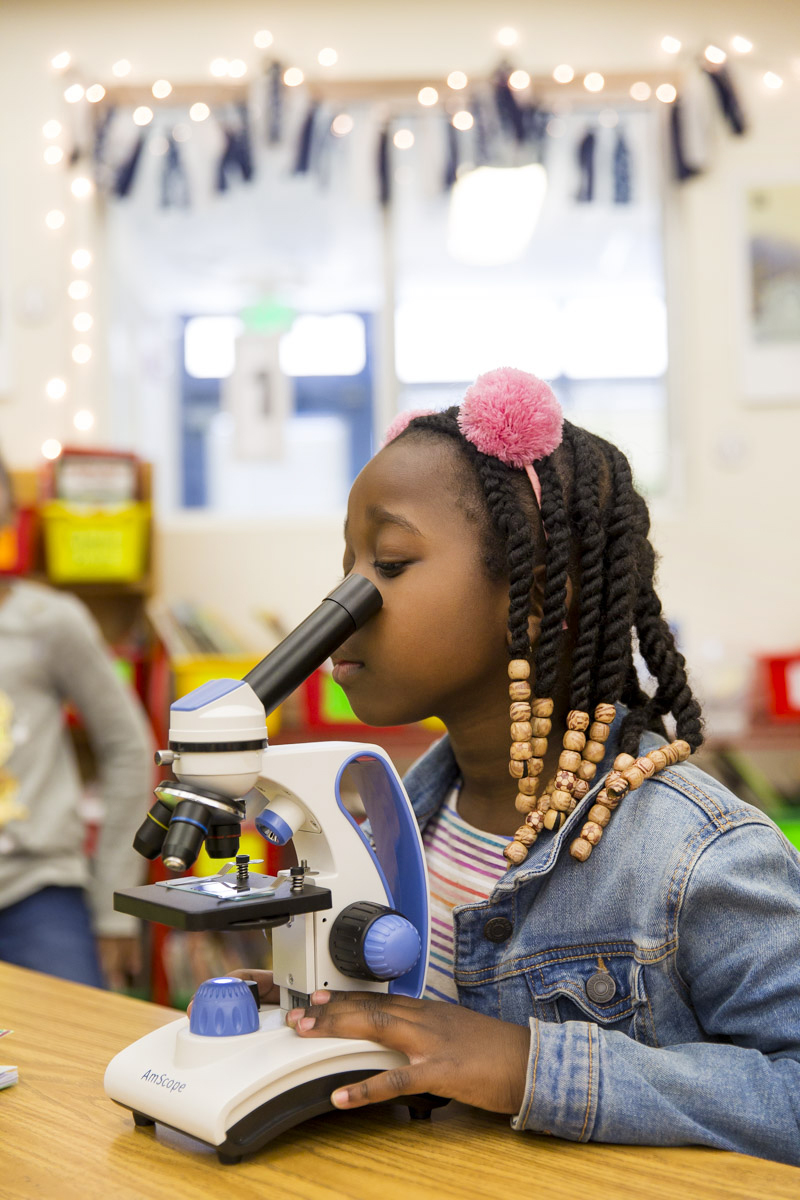
A little girl using a microscope Credits: Getty Images

Major Cuts To IMLS
Libraries and museums receive almost all of their funds from the federal government, relying heavily on grants to create and provide accessible resources. However, in March of 2025, President Donald J. Trump signed on an executive order titled “Continuing The Reduction Of The Federal Bureaucracy”. This executive order calls shrinking of numerous federal agencies, including the Institute of Museum and Library Services, also known as the IMLS.
This agency provides libraries and museums across the country with federal grant money, allowing them to conduct research and provide communities with basic amenities. Following the release of this executive order, the entire IMLS staff was placed on leave until further notice. This abrupt decision now has the future of this federal agency up in the air.
According to EveryLibrary, a public-library advocacy group, most libraries receive their funds through city/county taxes. However, without base federal funding, libraries in lower-income communities will be disproportionately affected, despite needing resources the most.
According to the Chief Officers of State Library Agencies, “federal grants from the IMLS account for almost one-third of all State Library Agencies’ budgets”. Without this crucial funding, libraries will soon have to do away with critical community-based programs and struggle to maintain basic functions.
Institute of Museum and Library Services Logo Credits: Institute of Museum and Library Services
Museum Policing
Alongside losses in federal funding, museums have also been under attack by the current administration. On March 27 of 2025, President Trump released an executive order entitled “Restoring Truth and Sanity to American History”. This executive order seeks to stop the spread of “corrosive ideology”, or plainly to stop the spread of un-American history. President Trump specifically focused on the Smithsonian Institute and its various branch museums, including the Smithsonian American Art Museum. The Smithsonian American Art Museum has an exhibit dedicated to using art to showcase scientific racism, which the administration claims is divisive and un-American. In this executive order, President Trump has assigned Vice President J.D. Vance the role of overseeing these exhibits on the Smithsonian Board of Regents. This power to control/regulate museum exhibits is detrimental to both scientific education and education as a whole. By restricting both historical and scientific data, our country will lack vital information in various fields, which could have otherwise been used to progress our learning.
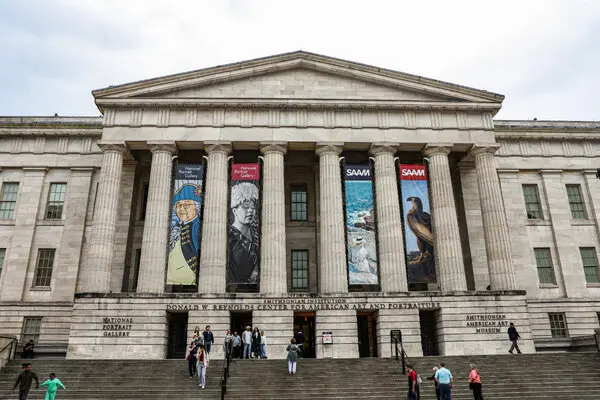
Outside Shot of the Smithsonian American Art Museum
Credits: Valerie Plesch for The New York Times
How To Take Action
While there are no overnight solutions to these current issues, it is important for every U.S. citizen to stay informed on both the state and national levels. However, staying informed is not all we can do to protect our libraries and museums.
There are numerous ways to help protect these essential places of learning:
- Look into your town’s local library
- Open a Library Card
- Utilize/Up-lift any locally sponsored events
- Donate/ Support advocacy groups (EveryLibrary)
- Visit Science Museums in Your Area
- Visit the Association of Science and Technology Centers to find your local Science Museums at https://www.astc.org/
- Look for Protests in your area
Works Cited
Chief Officers of State Library Agencies. “COSLA Welcomes Interim Acting Director Keith Sonderling to the IMLS.” Chief Officers of State Library Agencies, press-release, 24 Mar. 2025, www.cosla.org/assets/docs/PressReleases/COSLA%20Welcome%20to%20AD%20Sonderling.pdf.
“Home – Association of Science and Technology Centers.” Association of Science and Technology Centers, 10 Apr. 2025, www.astc.org.
“Legislation and Budget.” Institute of Museum and Library Services, www.imls.gov/about/learn-about-imls/legislation-and-budget.
Limbong, Andrew. “Entire Staff at Federal Agency That Funds Libraries and Museums Put on Leave.” NPR, 31 Mar. 2025, www.npr.org/2025/03/31/nx-s1-5334415/doge-institute-of-museum-and-library-services.
Skibba, Ramin. “The Disturbing Resilience of Scientific Racism.” Smithsonian Magazine, 20 May 2019, www.smithsonianmag.com/science-nature/disturbing-resilience-scientific-racism-180972243.
The White House. “Continuing the Reduction of the Federal Bureaucracy.” The White House, 15 Mar. 2025, www.whitehouse.gov/presidential-actions/2025/03/continuing-the-reduction-of-the-federal-bureaucracy.
—. “Restoring Truth and Sanity to American History.” The White House, 28 Mar. 2025, www.whitehouse.gov/presidential-actions/2025/03/restoring-truth-and-sanity-to-american-history.
image sources
- Children visiting the library: IStock by Getty Images
- Institute of Museum and Library Services: NPR
- 31cul-smithsonian-art-01-wkph-articleLarge: The New York Times