Public health information is a cornerstone of effective disease prevention, emergency response, and healthcare planning in the United States. Accurate and timely data is essential for public health officials, allowing them to:
- Track the spread of illnesses
- Identify health disparities across populations
- Allocate resources where they are most needed
COVID-19 provides a perfect example where access to infection rates, vaccination coverage, and hospital capacities enabled communities to implement targeted interventions and reduce mortality. Without comprehensive data, decision-making becomes reactive rather than proactive, increasing the risk of preventable harm and systemic inefficiencies.

Healthcare Purge
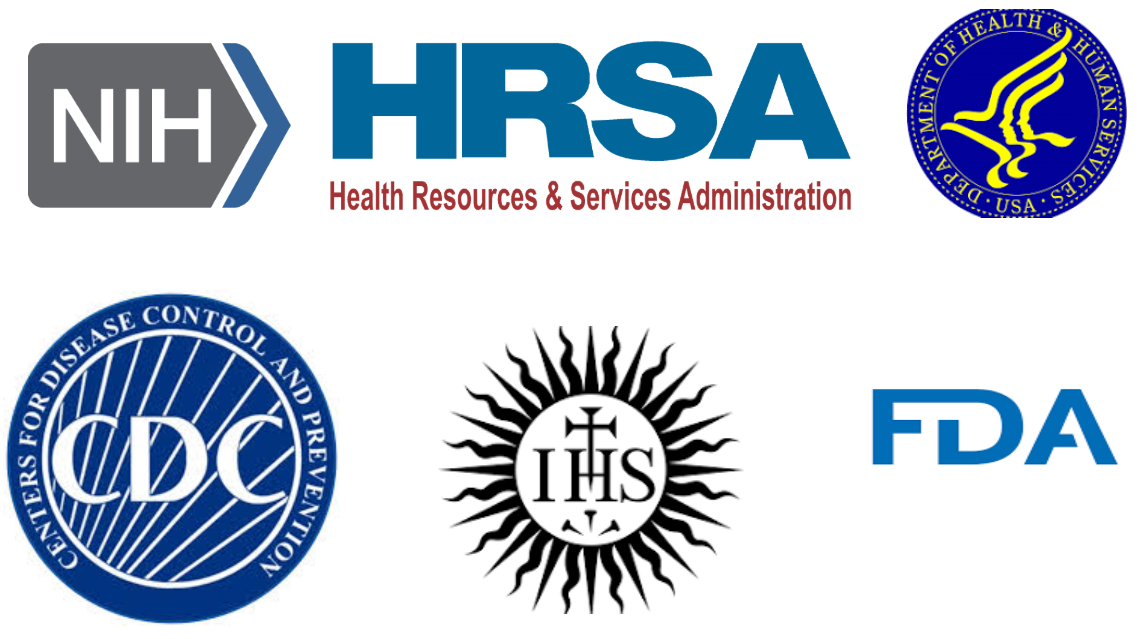
In early 2025, a significant data purge occurred across U.S. health institutions, leading to widespread concerns about public health transparency, data security, and the erosion of trust in federal health agencies. The major U.S. government health institutions include the NIH, CDC, FDA, HRSA, IHS, and HHS. Listed below are the forecasted budget cuts for these institutions so far in 2025:
- The Department of Health and Human Services (HHS) proposed slash of $36.40 billion or 40% of their budget
- National Institutes of Health (NIH) is expected to lose $20 billion or about 40% of its budget with officials stating they will have to close up to 19 institutions
- The Center for Disease Control and Prevention (CDC) has cut contract spending by 35% and additionally has lost $11.40 billion in COVID-19 pandemic funds
On top of cuts to major institutions, the government is working to cut medicare and medicaid for struggling Americans, some sources stating a potential $880 billion in cuts over the next 10 years.
Long-Term Consequences
The removal of public data access and budget cuts across federal and state health institutions will have both large and small scale consequences. Some individual communities rely on public health data and local trends to gauge environmental risks and the performance of health programs. They are also more likely to engage in informed healthy behaviors and engage in public health initiatives. This openness also enables journalists, advocacy groups, and watchdog organizations to hold institutions accountable, especially in marginalized or underserved areas where health inequalities are often overlooked. In a democratic society, public information is what empowers citizens to be less reliant on the government and advocate for themselves.
Not only is the government restricting access to public information that allows citizens to make their own informed health decisions, they are at the same time contradictorily reducing the size of the government health institutions. The impacts of the previously stated $880 billion medicare cuts are immeasurable, particularly in the underprivileged communities that these programs were originally created to help. These sudden cuts have also caused terminations of hundreds of research projects, mostly in universities, relating to a number of world and domestic health issues. Health disparities between states and other countries will become harder to view, international outreach programs such as COVID and HIV/AIDS preventions have been halted, and vaccine hesitancy is on the rise according to recent national polls.
How to Help
Every person should have liberty and choice over their health. Whether they require aid and government assistance or want to research themselves and take matters into their own hands, both of these options are currently being stripped away. A number of large watchdog groups are already fighting for U.S. healthcare rights including:
- Families USA
- Nonprofit that focuses on advancing affordable, high-quality healthcare for all Americans
- National Public Health Association (APHA)
- Fights for professional organizations and public health professionals. Also deeply involved in fighting for equal healthcare access and funding.
- Health Care for All
- Fights to promote universal healthcare in the U.S.
There are many ways to fight for healthcare rights through these organizations whether it is donations, participation in protests, votes, community engagement, etc.
Works Cited
Giles, M., Feiger, L., Schiffer, Z., & Haskins, C. (2025, April 22). Here’s All the Health and Human Services Data DOGE Has Access To. Retrieved from Wired: https://www.wired.com/story/doge-data-access-hhs/
Molenti, M., Parker, E., & Wosen, J. (2025, April 24). NIH grants plummeted $2.3 billion in Trump’s first months, as federal-academia partnership crumbles. Retrieved from Statnews: https://www.statnews.com/2025/04/24/trump-100-days-nih-new-grants-cut/
Salanga, J. (2025, January 31). As Trump orders public health data purge, journalists scramble to save info on gender diversity. Retrieved from The Objective: https://objectivejournalism.org/2025/01/as-trump-orders-public-health-data-purge-journalists-scramble-to-save-info-on-gender-diversity/
Stein, R., Lupkin, S., Noguchi, Y., & Wroth, C. (2025, April 3). On top of layoffs, HHS ordered to cut 35% of spending on contracts. Retrieved from NPR: https://www.npr.org/sections/shots-health-news/2025/04/03/g-s1-58145/hhs-fda-cdc-cuts-spending#:~:text=%22The%2035%25%20reduction%20in%20HHS,contract%20expenditures%20by%20this%20target.
Stone, W. (2024, February 6). Some federal health websites restored, others still down, after data purge. Retrieved from NPR: https://www.npr.org/sections/shots-health-news/2025/02/06/nx-s1-5288113/cdc-website-health-data-trump
Williams, E. (2025, March 24). Putting $880 Billion in Potential Federal Medicaid Cuts in Context of State Budgets and Coverage. Retrieved from KFF: https://www.kff.org/medicaid/issue-brief/putting-880-billion-in-potential-federal-medicaid-cuts-in-context-of-state-budgets-and-coverage/